Saturday, August 04, 2007

Losing it at the movies

If I could do anything other than my current work, (you know, wave a magic wand and make it happen and all that), I'd go into pictures. Either as a screenwriter or a director.

I like what today you'd call indie films. Quieter, calmer flicks that make you think or make you feel or do something other than show off special effects. Oh, I like those movies too. But, really, all they are good for is selling popcorn.

I like movies because it's so different from my craft. The written word is something else, sure. But films are visual. They bring with them a particular sensibility, and hence a unique power, of their own.

Walker Percy, I think in his novel "The Moviegoer," said that while other people have memories of dates and parties and how the weather was, they have the cat running underneath Orson Welles' legs in "The Third Man." One can relate.

Had a bad sinus headache tonight. So after spending the day with my buddy Shelton and his familia, I headed on home with the intention of reading Cormac McCarthy. But I fell asleep on the couch. So now I'm watching movies.

First up, it's an interview, actually, with film director Ingmar Bergman, who died earlier in the week. I've not seen any of Bergman's films, although I have "The Seventh Seal" recorded and put "Scenes from a Marriage" on my Netflix list. Fascinating stuff.

If I go a few rounds with insomnia again tonight, I've also got Eastwood's "Unforgiven" on DVD to watch again. Maybe not his best work, but darn good.

What's my favorite movie?

Oh, you get asked that, and I gather it's akin to trying to answer something like "Who's your favorite child?"

I don't know. "True Grit," for sentimental reasons. "Casablanca," just because. "The Searchers." "Dr. Zhivago." "Rear Window." And a bunch of others.

Can't do it. Like eating those potato chips, can't name just one.

OK, back to the flicks. See you on the flipside.

Labels: , , ,

Sunday, July 22, 2007

Anything but dated

Watching "Saturday Night Fever" all these years later, it's at first difficult to remember why I like this film.

It's terribly dated. Some of its themes and scenes could charitably be described as misogyny. Plot holes abound.

And yet --- for some of these same reasons, "Fever" is a triumph.

The film conjures a time and place, becomes ingrained in it, offers a stopped-time look at America, specifically Brooklyn, circa 1977. No movie save something like "American Graffiti" or "The Last Picture Show" does a better job at capturing, nay defining, an era.

John Travolta's Tony is a working-class stiff with big dreams. He wants more out of life than getting into trouble with his friends and living it up at the 2001 Odyssey disco on Saturday nights. The problem is he can't exactly figure out how.

And he suffers from the classic American male dilemma --- figuring out that women are more, much more, than sexual objects. It took me a whole lot of growing up and several later episodes of "M*A*S*H," awash in Alan Alda's feminist philosophy, to learn that lesson. Tony figures it out, sort of, through his friendship with Stephanie (Karen Lynn Gorney), the Brooklyn born woman who makes it to Manhattan.

What "Fever" does best, painfully so at times, is offer a bleak, honest realism to the venerable coming of age story. We may not like some of the film's gritty scenes, but I suspect they are as true to the period as anything put to celluloid.

Gorney is pretty but she isn't a Hollywood bombshell. And that's good. Tony, and we the audience, is taught to appreciate her for what she is, not for what she looks like.

And then there's that disco music. Love it, loathe it, it's catchy stuff. And it works well here as Travolta shows off the dance moves that made him a star. Hear "Night Fever" on the radio to this day, and suddenly you're strutting down the sidewalk with Tony as he makes his way to work.

The late film critic Gene Siskel loved this movie. His partner Roger Ebert once guessed Siskel saw it 17 times. He even bought Travolta's famous white suit at a charity auction.

Ebert guesses Siskel bonded with the film because it reflected who he was at that time in his life. And that's really what we want the arts to do to us, isn't it? How we react to it is all important; therein lies the rub.

Maybe it's not worth it to spend 20 minutes dissecting something like "Saturday Night Fever." Maybe it should be relegated to what it is -- a popular movie about Brooklyn teenagers enjoying the culture and music of the moment.

But, no. This film is more than that. Somewhere amid Tony's dreams of a better life lies a theme -- and a yearning desire -- that is anything but dated.

Labels: , , , , , ,

Sunday, June 10, 2007

'The kid stays in the picture'

I used to want to be in pictures.

Not so much as an actor. That died after my second foray into high school acting. I didn't like memorizing lines. Hated the endless rehearsing.

My interests strayed --- first to writing, then directing. Yeah. That's where it's at.

Well, I majored in history. Got a job in journalism. You know that. But I never lost my love for the movies.

I do have to say, though, that I changed my mind somewhat. Getting into pictures ain't what it's cracked up to be. Just ask Robert Evans.

Evans was one of those storybook discoveries. He took a dive into a hotel pool. Norma Shearer spotted him. Next thing you knew, he was starring opposite Tyrone Power and Ava Gardner (Frankie's wife, for god's sakes) in "The Sun Also Rises."

Problems right out of the gate, though. Nobody thought Evans good enough to play bullfighter Pedro Romero. Ernest Hemingway sent a telegram to 20th Century Fox saying as much. He convinced Power, Gardner and Eddie Albert to sign it too.

But producer Darryl F. Zanuck was the boss. "The kid stays in the picture."

And he did.

Zanuck saved Evans' career. He'd also unwittingly pointed him toward a new path.

By 1970, Evans was head honcho at Paramount. He developed Eric Segal's book "Love Story" into a film version. The picture's box office success saved the studio.

Then came the string of hits. "The Odd Couple." "True Grit." "The Godfather."

Back up a minute. Evans married actor Ali MacGraw during production of "Love Story." For a few minutes, hers was the most famous face on the planet.

Evans' fascinating career is the subject of a 2002 documentary, "The Kid Stays in the Picture." A buddy, Ross Southerland, let me borrow the film to watch during my illness. I finished it tonight.

What a story.

After a successful run as head of Paramount, Evans jumped back into film production. Right out of the gate, he made a winner, "Chinatown." By 1979, Evans was worth $11 million. A decade later, he had $37 in his bank account and was a major suspect in a murder.

And yet, through the scandals, successes and disappointments, he managed to survive it all. He's still working at Paramount. His last big hit, "The Saint," grossed millions.

Maybe this picture bid'ness ain't so bad after all.

Labels: , ,

Sunday, May 27, 2007

One charming 'Waitress'; more 'Yellow Roses'

A CHARACTER SPOUTS A LINE in a little-known 1974 film called "Lovin' Molly" that I like very much.

"A woman's love is like the morning dew," Mr. Fry says. "It's as apt to land on a cow turd as a rose."
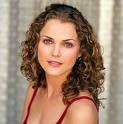
That line flashed through my mind while watching "Waitress," the late Adrienne Shelly's quirky, charming new film. Because that's the only way one can explain why the otherwise smart Jenna (Keri Russell), the waitress of the title, would marry a guy like Earl (Jeremy Sisto).

Jenna is a server at a small-town diner. (Think "Alice.") She makes pies. Darn good pies. To escape reality, she imagines baking new pies. All sorts of pies.

Her life is all but hopeless. She adores her two co-workers (played to the hilt by writer/director Shelly and Cheryl Hines). She loves making pies.

But all that's for naught because of Earl.

Earl doesn't let Jenna drive a car. He "don't want her to go nowhere," you see.
He has this obnoxious habit of honking his horn repeatedly whenever he picks Jenna up. In fact, nearly everything Earl does is obnoxious.

Jenna wants money to enter a pie making contest. Earl says no. She stashes funds anyway, waiting for the moment to leave this nightmare.

Oh, but something happens. Earl gets Jenna drunk one night. Oops. She gets pregnant too.
She doesn't tell him; she still plans to leave. To be quite honest, Jenna doesn't even want the baby. But whaddya do?

You go see your OB/GYN, that's what. But she's semi-retired. In her stead is a newcomer, neurotic Dr. Pomatter (Nathan Fillion).

His nervous Yankee demeanor creeps Jenna out. Then she jumps in his arms and plants a big wet one on his lips.

And therein lies the rub of this charming little flick. In the caring eyes of Dr. Pomatter, Jenna glimpses a better life. He listens to her. He holds her -- "nothing more, nothing less," she later writes her unborn child -- for 20 minutes. He makes her smile for what must be the first time in years. It's the beginning of one unique affair.

If all this seems like a slinging hash version of "Bridges of Madison County," you're dead wrong. This movie is about finding one's self. It's about dreaming big dreams. It's also a bit wacky, in a delicious, Dixie-fied, Flannery O'Connor kind of way.

Russell, best known as the star of the short-lived coming of age TV drama "Felicity," comes into her own with this role. Her Jenna becomes a complete woman when the final credits roll. This should be Russell's career-making role.

Shelly and Hines light up the screen as Jenna's fellow hash, er, pie slingers. (I swear I kept waiting for Hines to yell "kiss my grits!")

And what to say about Andy Griffith? Playing the diner's crusty-but-soft elderly owner Old Joe, Griffith turns in his best motion picture performance since 1957's "A Face in the Crowd."

At its core, "Waitress" delivers an important message. I won't reveal what it is for fear of giving away Jenna's ultimate choice, but I'm certain it's the correct choice. You'll think so too.

Despite its charming, happy feel, "Waitress" is overshadowed by melancholy. Not for anything on-screen, but because Shelly, who wrote, directed and co-starred in this film, was murdered late last year. Knowing she isn't around to bask in the afterglow of well-deserved applause for this masterpiece is a true bummer.

But that's the only depressing thing about this flick. After the lights come up, "Waitress" is as delicious and as filling as, well, a freshly-baked slice of pie.

"Waitress" is now playing at Regal Downtown West and at select theaters everywhere. It is rated PG-13 for adult language and situations.


Late last year, I wrote about an obscure 1976 Johnny Mathis song called "Yellow Roses on her Gown."

Yesterday, I received an e-mail about the song from Pat Murphy. Pat lives in Toronto. He hosts an excellent radio show, "The Long Note," the last Sunday of each month on CKLN-FM 88.1 in that city.

The program normally features songs performed in the Celtic tradition. But tonight Pat stepped away from that format to present a playlist entitled "Obscurities," songs you've rarely -- if ever -- heard.

Highlights included a little-known 1973 Glen Campbell recording of "Sold American," Elvis's heartbreaking, brilliant 1974 tear-jerker "Loving Arms" and Daniel O'Donnell and Mary Duff's beautiful cover of Porter Waggoner and Dolly Parton's country classic "Making Plans."

Near the end of the show, Pat played Mathis's tale of a disintegrating marriage. He was also kind enough to mention our e-mail conversation about the song.

Check out this eclectic station on the Web at http://www.ckln.fm/ "The Long Note" airs Sunday nights at 8 p.m. (Eastern).

Thanks for sharing this wonderful piece of music with your listeners, Pat. It remains the most hauntingly beautiful lyric and arrangement I've ever heard.

"Yellow Roses On Her Gown" can be found on the 4 CD Johnny Mathis box set "A Personal Collection" and on the out-of-print 1976 Mathis album "Mahogany."

Labels: , , ,

Saturday, May 26, 2007

Big Duke's big day


"Now on the day that John Wayne died, I found myself on the Continental Divide...Think of 'Red River' and 'Liberty Valance,' can't believe the old man's gone." --- Jimmy Buffett, "Incommunicado."

In a few minutes I'll skip this afternoon's Braves/Phillies match-up on FOX.

Don't worry. I'm not sick (well, other than the kidney stones). Nope, today is a very special birthday. A big, whoppin', big as life centennial celebration for a guy who was all that and plenty more.

Hard to believe, but today would have been Marion Morrison's 100th birthday. You know him better as John Wayne.

Wayne was a lot of things to a lot of people. To some, he was a great actor. To others, a loudmouth conservative, a no-talent hack who simply played himself again and again in formula films with repetitive plots. To millions both at home and abroad, Duke Wayne was America.

I don't pretend that Wayne was a skilled actor with the range of somebody like Laurence Olivier. But he found a niche and did it well.

Those who worked with him loved him. Liberal activist/actors (Kirk Douglas, Katherine Hepburn) said Wayne was nothing but a gentleman. They found him to be well-read, tolerant and a genuine professional. Even Barbra Streisand couldn't contain her excitement when she announced Wayne's name as the Best Actor winner of 1969 for his best film, "True Grit."

The public made him America's top movie star for a quarter century. Twenty-eight years after his death, John Wayne can regularly be found at or near the top of the annual list of favorite actor polls.

I suspect that profound sociological, cultural and political reasons make this so. But we won't get into all that now. Today's a birthday party, remember?

In honor of Big Duke's big day, here is my list of 10 John Wayne films that any serious American movie buff should screen. Aside from the No. 1 film, they aren't in any particular order. I simply can't rank John Wayne's films based on personal preference. Just can't do it.

Happy birthday, Duke!

1. True Grit (1969) --- Far and away his best picture, this simple tale of seeking justice won Wayne a long overdue Best Actor Academy Award. His slightly off-center portrayal of ne'er-do-well U.S. Marshal Reuben "Rooster" Cogburn is one for the ages. Young Kim Darby is his perfect foil. Overlook Glen Campbell and this is a five-star picture.

2. The Searchers (1956) --- A favorite of domestic and international film critics, this movie is the high water mark in the John Ford/John Wayne filmography. Wayne's portrayal of the haunted Ethan Edwards is arguably his best. Director Ford was at the top of his game here. Makes a powerful case for the best American western ever put to celluloid. Monument Valley never looked so good.

3. The Shootist (1976) --- Wayne's final film is an emotional character study of an aging gunfighter who comes to Carson City, Nev., in order to die. The fact that Duke himself passed three years later of the same disease his character suffers from makes "The Shootist" painfully prophetic. The scenes between Wayne and Jimmy Stewart, playing the town doc who gives Wayne's character the bad news, should be textbook studies for anyone who aspires to act. Ron Howard, Lauren Bacall, Richard Boone, Hugh O'Brian, Harry Morgan and Scatman Crothers shine in supporting roles. A fitting epitaph to a great career.

4. McLintock! (1963) --- This comedic western remake of "Taming of the Shrew" is a two-hour delight. Wayne and Maureen O'Hara, playing his estranged wife here, were simply made for one another.

5. Red River (1948) --- John Ford reportedly said after screening this Howard Hawks masterpiece, "I didn't know the big SOB could act." Duke delivers a mature performance as the rough, tough trail boss Tom Dunson. Montgomery Clift is equally fantastic as Dunson's protege. I'd like it better if not for the lackluster ending.

6. Rio Bravo (1959)
--- Howard Hawks had an obsession with this story. He later remade it twice (in "El Dorado" and "Rio Lobo"), all three times using Wayne in the starring role. The original is best. Dean Martin and Ward Bond are fantastic in supporting roles and pop singer Rick Nelson turns in a surprisingly decent performance as a young gunslinger.

7. Hondo (1953) --- I don't know why I like this movie so much, but it may be Wayne's most underrated western. A more subtle take on "Shane," Wayne plays an outlaw who falls in love with a married woman whose young son idolizes Wayne's Hondo Lane. For whatever reason, this film never has received the respect it deserves.

8. In Harm's Way (1965) --- Another underrated picture. This Otto Preminger flick is set in Hawaii before and after the December 1941 attack on Pearl Harbor and focuses on the Navy's initial fight against the Japanese. Loaded with stars (Kirk Douglas, Burgess Meredith, Knoxville's own Patricia Neal), this film puts 2001's "Pearl Harbor" to shame.

9. The Sands of Iwo Jima (1949) --- Far and away the best of Wayne's war pictures. A bit corny, but perfect for its time. Wayne's mentoring of a young John Agar is another classic bit of cinema. I admit it -- when Wayne's character meets his fate, I shed a tear. Duke's losing to Broderick Crawford for Best Actor that year is a bigger farce than Peyton Manning losing the Heisman Trophy to ol' what's-his-name.

10. The Man Who Shot Liberty Valance (1962) --- John Ford's claustrophobic western is an unsentimental examination of myth and reality during the taming of the West. Wayne plays the outlaw hero. Jimmy Stewart is the wimpy lawyer with a lot of guts. Vera Miles loves them both. One of them shoots Lee Marvin at the end. This is such a fine film. It's the most unique entry in the long Wayne-Ford collaboration.

Labels: , , ,